Stay Ahead of Funding Run‑Outs: A Small Business Guide for Government Shutdowns
October 17, 2025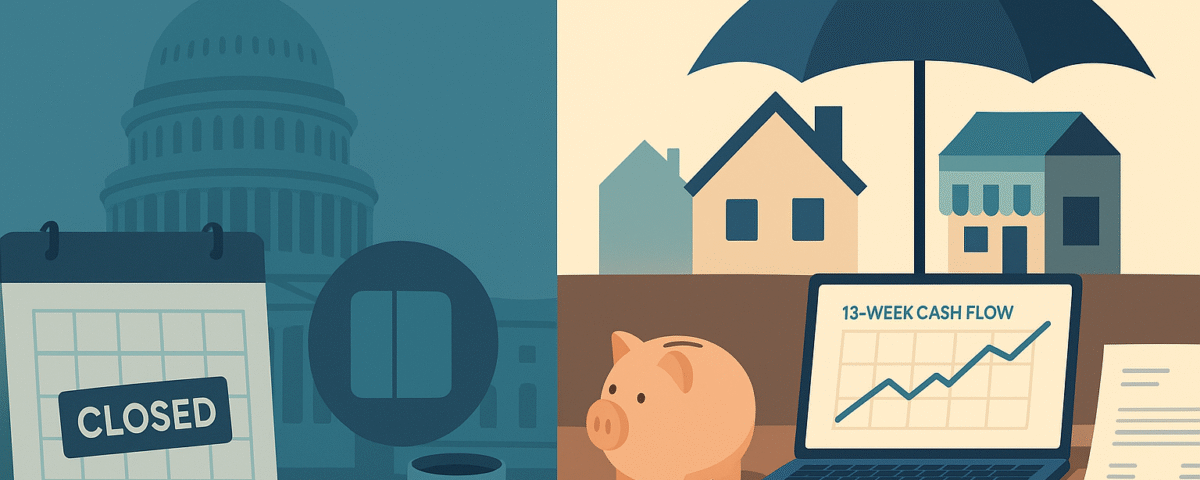
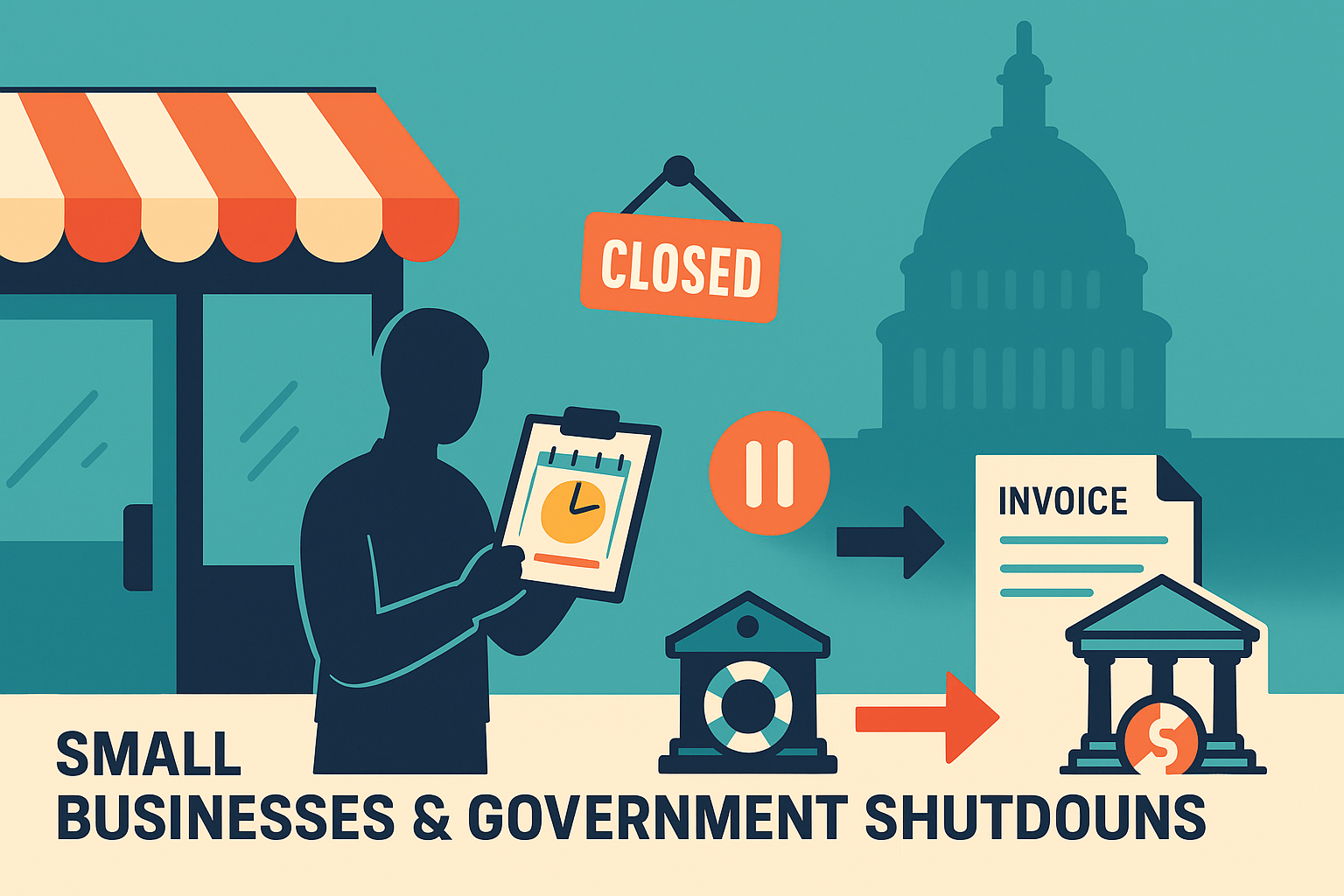
When Congress misses the deadline to pass appropriations, we get a government “shutdown” or, more precisely, a lapse in appropriations. For federal contractors and the small businesses that support them, this isn’t a once‑in‑a‑lifetime event it’s something we’ve all seen before and, realistically, will see again. The good news: with a steady plan, you can keep your company resilient, protect your people, and be poised to move fast when funding is restored.
The Household Analogy:
Think of your business like a family household:
- Income pause: A shutdown is like a paycheck delay. Money may still be owed to you, but the timing becomes uncertain.
- Fixed vs. discretionary expenses: The mortgage and utilities (payroll, rent, software you truly need) must be covered; dining out and streaming packages (nice‑to‑have tools, nonessential travel) can pause.
- Emergency fund: Families survive interruptions with an emergency fund. Businesses do the same with a cash buffer or line of credit.
- Proactive communication: Just like a family would call the landlord or lender early, a subcontractor should talk with their prime early and often.
The goal isn’t to hunker down in fear, it’s to act like a well‑run household that understands its must‑pays, trims the extras, and stays in close contact with partners.
1) Forecast With Clarity (30/60/90 Days)
What to do now
- Build a 13‑week cash forecast (the gold standard for short‑term planning). Update it weekly during a shutdown window.
- Create 30/60/90‑day scenarios tied to revenue timing:
- Base case: Short delay in awards or payments.
- Conservative case: 60‑day pause on new work; slower collections.
- Severe case: 90‑day pause and stop‑work on certain tasks.
- Map contracts to scenarios: For each contract or task order, record:
- Funding status (funded, incrementally funded, awaiting funds)
- Period of performance dates
- Whether work is “exempt”/continues or “non‑exempt”/pauses
- Burn rate and runway under each scenario
- Prioritize backlog and BD: Reorder priorities so staff can focus on proposals, pipeline qualification, quality improvements, and training when billable work slows.
Simple runway formula
Runway (months) = Cash & equivalents ÷ Average monthly operating expenses
Track this weekly when appropriations are at risk.
2) Communicate Early With Your Prime Contractors
Your prime is like the household’s landlord or lender tell them your situation early and ask for clear guidance in writing.
- Confirm status: “Is our task order funded? Do you expect a stop‑work? If so, when and for which CLINs?”
- Request written direction: Verbal “keep going” isn’t enough. Ask for a funded modification or explicit written authorization before incurring costs.
- Coordinate staffing plans: Share your staffing ramp/hold plan so your prime can sequence work once funding resumes.
- Align on invoicing cadence: Clarify how and when to submit invoices during the lapse and how backlog will be processed after.
Copy‑and‑send email template
Subject: Funding & Performance Guidance – [Project/TO #]
Hi [Prime PM/Contracts],
Given the potential lapse in appropriations, we’re reviewing staffing and burn. Could you please confirm the current funding status for [Project/TO #], including any expected stop‑work timing and scope? If work should continue, would you provide written direction and funding details for the affected CLINs?
We’ll adjust our schedule accordingly and keep our team ready to ramp as soon as funding is confirmed. Please also advise on invoicing cadence during this period.
Thanks,
[Your Name]
3) Watch Your Indirect Rates Like a Hawk
During funding uncertainty, small changes in overhead can push your indirect rates (Overhead, G&A, Fringe) above targets hurting price competitiveness and profitability.
Three fast controls
- Freeze discretionary overhead: Nonessential travel, conferences, subscriptions, equipment upgrades, and delayed hires.
- Right‑size fixed costs: Revisit office space commitments, renegotiate vendor terms, and consolidate software where possible.
- Reassign unbilled time: Redirect staff to funded internal priorities proposal writing, QA, process automation so hours deliver future value.
Know your targets
- Overhead Rate ≈ Overhead Costs ÷ Direct Labor (base)
- G&A Rate ≈ G&A Costs ÷ Total Cost Input (or another approved base)
Track these monthly, then stress‑test them under your 30/60/90‑day scenarios. If direct labor drops, your rates will climb unless you cut overhead/G&A in tandem.
Tip: Put rate alerts in your forecast: “If direct labor falls below $X this month, automatically defer Y% of noncritical spend.”
4) Cash On Hand: Build Your Business “Emergency Fund”
Cash is the household’s rainy‑day fund. In a shutdown cycle, liquidity buys time and options.
Practical steps
- Target a 3–6 month payroll buffer (cash + undrawn LOC). Higher if your revenue is concentrated on unfunded work.
- Accelerate receipts: Invoice promptly, follow up on aging AR, and verify your banking details with primes to avoid ACH delays.
- Stage payments: Time larger vendor payments to known inflows, while maintaining good standing with critical suppliers.
- Maintain a ready line of credit: Don’t wait for the storm to apply; negotiate terms when your financials look strong.
- Pre‑approve expense tiers: For example, “any spend over $1,000 requires CFO approval during a lapse.”
Signal to your team (kindly, clearly): why travel freezes or training deferrals matter now and exactly when they’ll be revisited.
People First: Keep Your Team Informed and Engaged
- Weekly updates during the uncertainty window brief, honest, specific.
- Cross‑training to reduce single‑points‑of‑failure and improve coverage when ramping back.
- Use the pause wisely: proposals, capability statements, compliance checkups, automation of recurring tasks, security posture improvements.
After Funding Resumes: Accelerate With Discipline
- Reconfirm scope and funding before restarting paused tasks. Get mods in hand.
- Re‑sequence work with your prime/agency to hit the most time‑sensitive deliverables first.
- Debrief the playbook: What worked? What to change for next time? Update your 13‑week model, cash targets, and communication templates.
Quick Checklist (Copy/Paste)
- 13‑week cash forecast built and reviewed weekly
- 30/60/90‑day scenarios tied to each contract’s funding status
- Written guidance from primes (or stop‑work orders) on file
- Indirect rate dashboard with threshold alerts
- Discretionary spend freeze and vendor/pricing plan
- Cash runway target set; LOC ready and tested
- Staff plan for pause period (BD, QA, training, automation)
- Ramp‑back plan and comms drafted for “funding restored”
Final Word
Government shutdowns and lapses in appropriations are not new and they’re increasingly familiar. Treat them like a household treats an income pause: plan the budget, talk early with key partners, trim the extras, and protect the emergency fund. With that mindset, your small business can weather the storm and be first out of the gate when the sun comes back out.